For such a small strip of fabric, socks carry disproportionate weight in an outfit. They occupy the critical junction between your trousers and your footwear—the exact visual pivot where tailoring meets leather. When handled thoughtfully, socks create a cohesive, deliberate flow that elevates a standard suit or casual weekend wear. Handled poorly, they can break an otherwise sharp silhouette, drawing the eye down for all the wrong reasons.
Most men stumble through this detail because traditional style advice can feel either overly rigid or chaotically permissive. On one end of the spectrum, outdated conventions demand that socks strictly disappear into your pants. On the other, modern trends encourage wild neon prints and novelty patterns under the guise of personality. Mastering this subtle art requires neither dogmatic conservatism nor eccentric fashion risks. It comes down to understanding visual proportion, color temperature, and the specific context of your environment.
The Cardinal Rule: Match Your Socks to Your Trousers
If you only commit one style guideline to memory, make it this: your socks should match the color of your trousers, not your shoes.
This principle is grounded in basic visual geometry. When you walk, sit, or cross your legs, your trouser cuffs naturally ride up several inches. If your socks closely align with the tone of your pants, the visual line of your leg remains intact. Your legs appear longer, your posture appears taller, and your shoes stand out as a clean, intentional anchor rather than a jarring interruption.
Conversely, if you match your socks directly to your shoes, you create an optical extension of the footwear. A black shoe paired with black socks under gray trousers visually turns your dress shoe into an awkward, ankle-high boot. The leg line abruptly halts at the trouser hem, effectively truncating your height and making your proportions look stocky.
Matching your trousers does not mean chasing down an exact chemical dye match. Precise matches can look mechanical and unnatural. Instead, focus on tonal harmony.
-
Pair charcoal gray trousers with slate, heather gray, or deep graphite socks.
-
Complement classic navy suit pants with midnight blue, indigo, or dark sapphire.
-
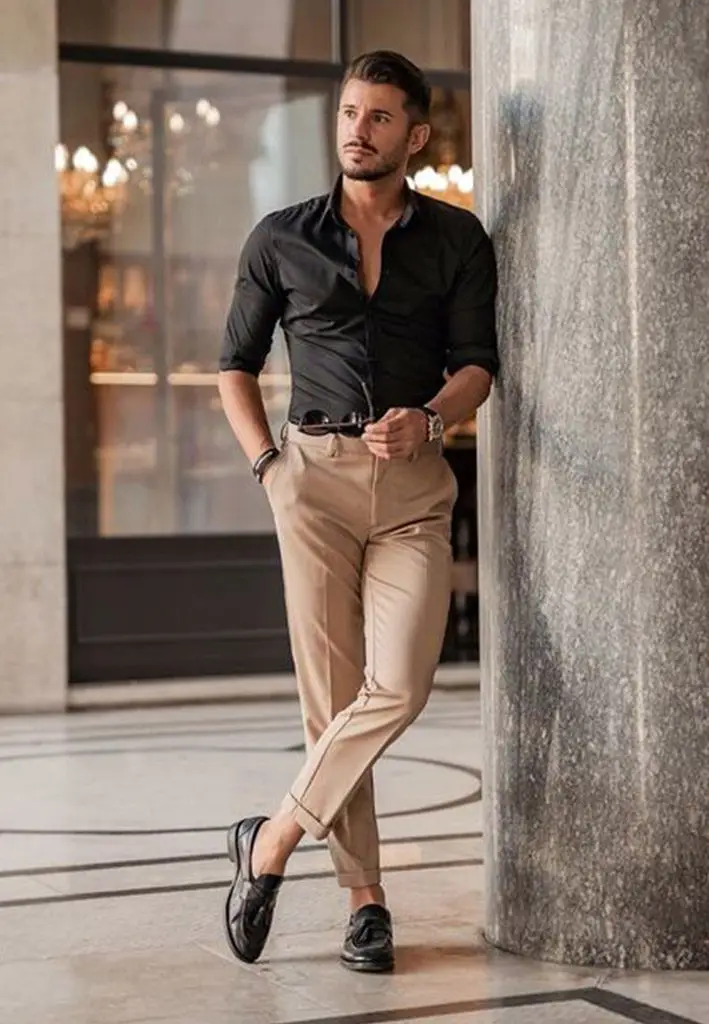
Coordinate olive or khaki chinos with loden green, moss, or muted taupe.
Aim for socks that are slightly darker than your trousers rather than lighter. Darker shades create a grounded, natural gradient that transitions smoothly into the dark leather of your shoes.
When Matching Socks to Shoes Actually Works
While matching trousers remains the gold standard for formal and business attire, there are select scenarios where pairing socks to shoes produces a handsome, balanced look. This approach belongs almost exclusively in casual, utilitarian, or intentionally monochromatic outfits.
Monochromatic Ensembles
In full monochromatic dressing, the tension between trousers, socks, and shoes disappears entirely. A charcoal suit worn with black oxford shoes and black fine-ribbed socks works because the entire bottom half of the outfit operates in a narrow grayscale palette. Similarly, pairing dark selvedge denim with black leather Chelsea boots and dense black socks creates a sleek, rock-inspired profile where no single element competes for attention.
Rugged and Workwear Aesthetics
With heavy boots and rugged trousers, strict tailoring rules fall by the wayside. If you are wearing brown leather work boots or commando-soled brogues with rolled chinos or raw denim, thick socks that harmonize with your boot leather look natural. Earthy tones such as marled oatmeal, heather brown, and forest green bridge the gap between heavy footwear and durable canvas or denim, adding texture rather than visual disruption.
The Art of the Accent Sock
Once you have mastered tonal consistency, introducing intentional contrast allows you to inject personal character into your wardrobe without looking like an amateur. An accent sock should feel like a deliberate styling choice, not an accidental mismatch.
Drawing from Secondary Elements
The most sophisticated way to wear colored or patterned socks is to pull a secondary color from your upper body. Rather than choosing a shade that mirrors your trousers or shoes, look for subtle accent tones present elsewhere in your outfit:
-
The faint overcheck line in a tweed sport coat.
-
A secondary stripe in a repp tie.
-
The base shade of a wool sweater or cardigan.
-
The border color of a pocket square.
If you are wearing a navy suit, white shirt, and a deep burgundy tie, wearing solid burgundy socks instantly ties the entire composition together. The eye naturally connects the two points, recognizing a cohesive color strategy that feels thoughtful rather than showy.
Choosing the Right Patterns
Patterned socks are a great asset when kept subtle, but they become an eyesore when oversized. Steer clear of loud cartoonish graphics, novelty motifs, and oversized polka dots. They cheapen an outfit and project an air of childishness.
Instead, invest in time-tested menswear patterns rendered in muted, complementary tones:
-
Birdseye: A micro-dot texture that reads as a solid from a distance but reveals rich depth up close.
-
Herringbone: A classic V-shaped weave that lends architectural structure and pairs exceptionally well with heavy wools and flannels.
-
Fine Ribbing: Vertical raised lines that provide tactile interest while keeping socks anchored firmly to your calf.
-
Glen Plaid and Houndstooth: Traditional suiting patterns scaled down for hosiery, perfect for bridging formal shoes with business-casual trousers.
When selecting patterned socks, ensure that the background color of the pattern still harmonizes with your trousers. A dark navy sock with fine cream micro-dots worn under navy trousers gives you visual texture while preserving that essential leg-lengthening silhouette.
Navigating Dress Codes and Footwear Pairings
Context dictates how bold you can be. A sock pairing that turns heads at a summer garden party will look completely out of touch in a federal courtroom or a black-tie ballroom.
Formal and Black-Tie Events
Formal wear operates on strict, uncompromising rules. When wearing a tuxedo or dinner suit, there is zero room for accent colors, whimsical patterns, or novelty textiles. Your socks must be jet black, made from sheer silk or fine mercerized cotton, and cut over the calf. The texture should carry a faint, elegant sheen that complements the grosgrain or satin facings of your lapels and the high polish of your patent leather shoes.
Corporate and Business Professional
In traditional corporate environments, conservatism remains king. Stick closely to the primary rule: match the sock to the trousers. If you wear a charcoal worsted wool suit with black cap-toe oxfords, wear charcoal socks. If your suit is navy, wear deep navy socks. Subtle tonal ribs or ultra-fine herringbone in identical colorways are acceptable, but contrasting colors should generally be avoided unless your workplace leans modern and creative.
Smart Casual and Business Casual
This is where your wardrobe opens up. Chinos, flannel trousers, odd jackets, and sport coats pair naturally with richer sock colors and textures.
-
Medium Gray Flannels: Pair them with oxblood or rich burgundy socks to complement dark brown suede double monks.
-
Tan or Khaki Chinos: Try forest green, burnt orange, or rich rust socks alongside medium brown derby shoes or leather penny loafers.
-
Navy Odd Trousers: Introduce soft petrol blue or plum socks to add nuance beneath an unstructured blazer.
Casual Denim and Sneakers
With casual denim and low-profile sneakers, the rulebook changes significantly. Athletic tube socks belong strictly in the gym, but high-quality ribbed cotton socks in vintage off-white or cream look exceptional when paired with canvas court sneakers and cuffed raw denim. If you are wearing minimalist leather sneakers, consider true no-show socks that protect your footwear without showing above the sneaker collar, giving your ankles a clean, uncluttered break.
Fabric, Texture, and Weight
Most men focus exclusively on color, completely overlooking fabric weight. Wearing the wrong fabric gauge ruins an outfit just as quickly as a mismatched color. A sock must physically balance both the weight of your trouser cloth and the heft of your shoe.
Fine dress shoes, such as sleek Italian oxfords or thin-soled dress loafers, require thin, high-gauge cotton lisle, silk, or lightweight merino wool. Stuffing a thick, chunky boot sock into a narrow dress oxford stretches the leather out of shape, creates uncomfortable friction, and looks completely incongruous around the ankle.
Conversely, pairing flimsy, translucent dress socks with heavy Goodyear-welted boots or chunky wingtips looks frail and out of proportion. Heavyweight textiles—such as tweed, heavy corduroy, and raw denim—require thick ribbed cotton, ragg wool, or cashmere-blend socks that hold their own against substantial leather outsoles.
Merino wool is the most versatile all-season sock fabric available. It naturally wicks moisture, regulates temperature across both cold winters and hot summers, resists odors, and retains its dyed color far longer than standard cotton. For casual wear, combed long-staple cotton with a hint of nylon and elastane offers durability, soft structure, and reliable shape retention.
Length Matters: The Over-the-Calf Advantage
The cut of your socks is just as vital as their color. Dress socks come primarily in two lengths: mid-calf (crew) and over-the-calf (executive length).
Mid-calf socks rely entirely on a band of elastic around the widest part of your calf. As you walk throughout the day, muscle movement inevitably causes them to loosen, slide downward, and pool into messy wrinkles around your ankles. Even worse, when you cross your legs in a meeting, a fallen mid-calf sock exposes a bare patch of hairy calf—a sloppy detail that instantly undermines an otherwise tailored appearance.
Over-the-calf socks are the professional standard. Because they taper past the curve of your calf and rest just beneath the knee, gravity works in their favor. They stay smooth and upright all day without requiring constant adjustment. If you wear suits or tailored trousers regularly, converting your sock drawer to over-the-calf styles will permanently solve the problem of bunching fabric and exposed skin.
Three Common Mistakes to Avoid
Even well-dressed individuals fall into a few recurring traps when assembling their daily footwear. Eliminating these three missteps will put you ahead of the curve.
Reaching for White Athletic Socks
White ribbed gym socks should never touch trousers, dress shoes, or smart-casual footwear. Their heavy athletic ribbing, stark bright tone, and Terry-cloth loops scream locker room. If you want a light sock for casual settings, opt for an off-white, oatmeal, or unbleached ecru wool sock designed specifically for lifestyle wear.
Letting Novelty Define Your Personality
Brightly colored socks adorned with tacos, rubber ducks, or superheroes do not communicate confidence; they read like an attempt to compensate for an otherwise bland outfit. If you want your clothing to express flair, use genuine style tools: rich textures, subtle earth-toned patterns, and balanced color accents that reward close inspection.
Wearing Visible Ankle Socks with Tailored Shoes
Ankle socks that cut across the malleolus bone belong exclusively on running tracks and tennis courts. When wearing loafers or dress shoes with bare ankles in warm weather, commit to true invisible, no-show socks. High-quality no-show socks feature low-cut vamps and silicone heel grips, protecting your shoes from perspiration without visibly crowding your ankles.
A Reliable Routine for Every Morning
Matching your socks does not need to add ten minutes to your morning routine. The process boils down to three straightforward questions:
-
What is the occasion? If formal or professional, match your socks directly to the base color of your trousers.
-
What is the weight of the shoe? Pair lightweight footwear with fine, smooth-knit socks, and heavy leather shoes with thick, textured yarns.
-
Is there an accent to mirror? If you are dressing smart casual and want to inject contrast, pick a sock that catches a secondary shade from your tie, knitwear, or jacket.
Treat your socks as an intentional bridge between your clothes and your shoes rather than an afterthought pulled from a dark drawer. When you get this detail right, your entire outfit clicks into place with effortless, balanced cohesion.